When you first open a gymnastics gym, your main goal is to get your business in front of as many potential gymnastics families as possible. Once you acquire your first customers, you’ll not only want to continue growing your business but also retain your existing customer base.
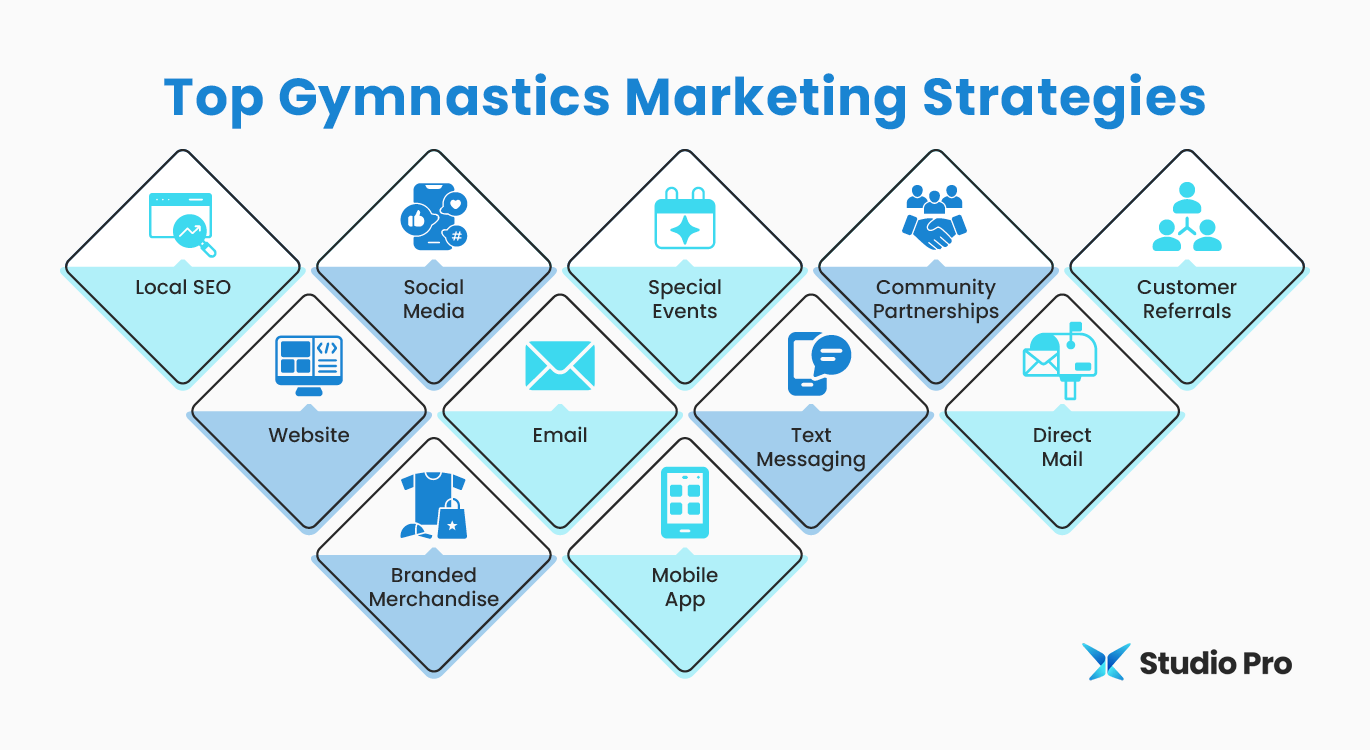
To build a thriving gym, you need a strong gymnastics marketing strategy. Systematically promoting your gym will help you reach future gymnasts and keep your current athletes around. In this guide, we’ll answer your top questions about gymnastics marketing and provide strategies you can use to expand your reach:
Gymnastics Marketing FAQs
How much should my gymnastics gym spend on marketing?
Small businesses like gymnastics gyms typically spend about 5-8% of their gross revenue on marketing. However, brand-new gyms or those looking to fill a new program may spend closer to 10-12% on marketing. If you have a tight budget, try leveraging strategies with lower associated costs, such as local SEO, community partnerships, and customer referrals.
Are free trials the best way to get new gymnastics students?
While free trials are great lead generation tools for other businesses, they’re not always the best for gymnastics gyms. Even though free trials generate a high volume of leads, they often attract low-intent prospects who churn after the trial is over.
Instead of free trials, many gyms are moving toward paid evaluations or introductory month discounts. When you charge a small amount upfront, you qualify the lead and ensure the parent or guardian understands the costs and commitment your gym requires.
How should my marketing differ for my competitive gymnastics team and recreational classes?
Your external marketing should focus on recreational classes, while your internal marketing should highlight competitive team opportunities.
Typically, most of your revenue will come from recreational classes, as these are the highest volume offerings with the lowest associated costs for your gym. As a result, most of your marketing budget should go toward promoting these recreational classes to an external audience via social media, local SEO, special events, community partnerships, acquisition email marketing, and more.
Your best prospects for your competitive gymnastics team won’t necessarily be people who see your social media ads or attend your parents’ night out. More often, athletes will join your recreational classes, and as their skills progress, they’ll become better suited for and potentially interested in your competitive team.
By tracking skill progression in your gymnastics management software and sharing key updates with the families of talented recreational athletes, you can build an internal pipeline from your recreational program to your competitive team.
When should I start marketing for summer gymnastics camps?
The sooner you start marketing for summer gymnastics camps, the better. Ideally, you should launch early bird campaigns in late February or early March to give parents enough time to plan their children’s summers in advance. If you wait until May to start your marketing efforts, many parents may have already signed their children up for different camps.
How do I know if my gymnastics marketing strategy is actually working?
Use lead management software to measure whether your gymnastics marketing strategy is actually working. Lead management platforms allow you to track lead sources to determine which are generating the most leads and analyze metrics like sign-ups, conversion rates, and campaign performance.
11 Gymnastics Marketing Strategies
1. Local SEO
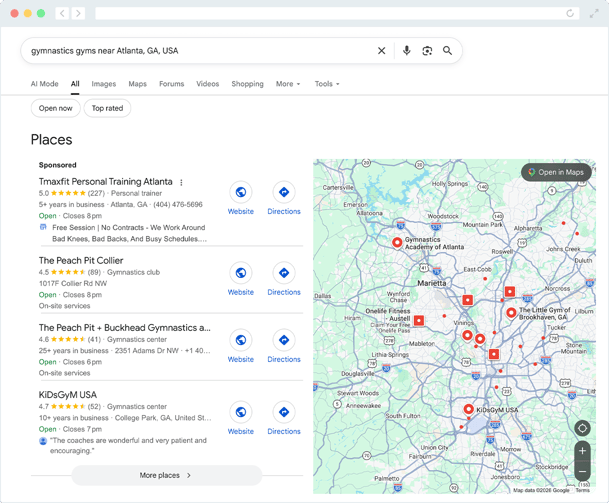
Many potential customers look for gyms simply by searching for “gymnastics gyms near me” or “gymnastics gyms in [your city or town].” Local search engine optimization (SEO) involves structuring your website to ensure it shows up for these local queries.
Here’s what success with this strategy would look like for an Atlanta-based gym:
Start helping local searchers find and stay on your site by:
-
Incorporating relevant keywords. Google and other search engines crawl the web, assessing the most relevant content to show in search results. One of the easiest ways to increase visibility is by adding keywords to your website content so Google can make the connection between your gym and users’ searches. For example, you could write on your homepage that your gym, Flipping Out, is a gymnastics gym in Houston, Texas, to attract local searchers.
-
Making your site mobile-friendly. Search engines also assess your site’s mobile-friendliness, or how usable it is for searchers visiting your site from their mobile devices. Test your site on mobile to ensure all text is large enough to read and touch targets are large enough to tap.
-
Ensuring quick load times. Google also evaluates your website’s load time, since users will bounce from your site if it takes too long to load. Use a tool like Google Lighthouse to analyze load times and identify opportunities for improvement, such as reducing image file sizes.
Additionally, ensure your Google Business Profile contains up-to-date information like your gym’s name, address, phone number, and email address. Ask satisfied parents to leave positive reviews that will reassure searchers that your gym is worth checking out.
2. Social Media
Social media is a key channel for reaching local families and helping them learn more about your gym. There are two main types of posts your business can make on social media:
-
Organic social media posts are the typical posts anyone can create on their profiles. When someone follows your gym’s account, they’ll see your organic posts appear in their feeds.
-
Paid social media ads are advertisements you can purchase on platforms like Facebook and Instagram to target specific audiences. For example, you may launch an ad promoting your gym’s introductory month discount and configure it to target parents of elementary school-age kids within a 10-mile radius of your gym.
While organic posts are best for building familiarity with your brand, paid ads expand your reach and help you find prospects in your local area. To truly make your gym’s social media presence stand out, we recommend:
-
Leveraging user-generated content (UGC). User-generated content (UGC) refers to posts created by your parents and athletes. UGC gives your social media presence a more authentic feel and shows prospective customers the real moments happening at your gym every day. Encourage families to tag your gym’s account in any photos they post of their gymnasts in action so you can easily repost them.
-
Posting coach spotlights. Parents need to trust the coaches who are spending time with their children. Introduce current and prospective gymnastics families to your coaches by posting “Meet the Coach” spotlights on your social media. That way, your audience can become more familiar with your staff, potentially before they even set foot in your gym.
-
Making your conversion process seamless. If a parent sees your post about a new preschool class, but it’s way after business hours, and their only option to sign up is to call your front desk, you might lose the lead. Add links in your social media bios to forms where interested parents can easily sign up at any time.
How Studio Pro Can Help
Studio Pro can help you run more successful gymnastics marketing campaigns on social media by:
-
Generating a simple registration link that you can share on social media to facilitate conversions.
-
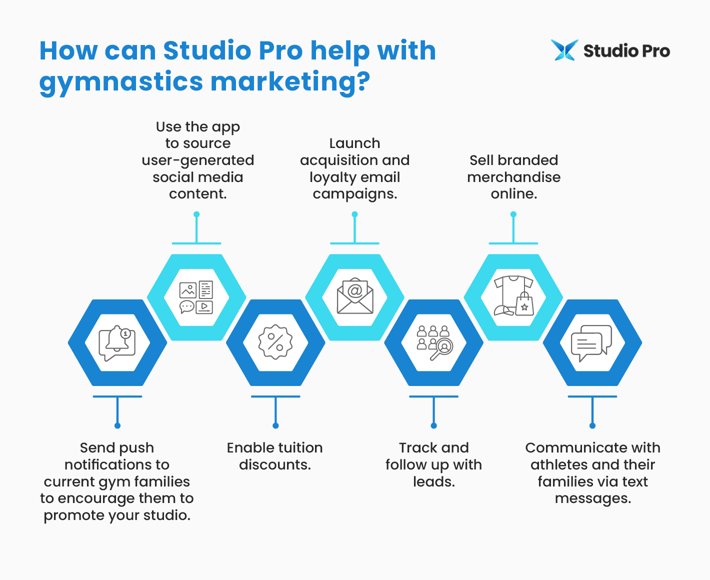
Sending push notifications to current gymnasts and families that encourage them to promote your gym on social media.
-
Collecting UGC through the mobile app.
-
Tracking the effectiveness of social media campaigns for acquiring leads.
3. Special Events
Not every parent will consider gymnastics for their children right off the bat. Sometimes, they need to enter your gym, meet your staff, and see their child having fun before they realize gymnastics is something worth investing in.
Hosting events gets prospects in the door who may not otherwise have interacted with your gym, giving you an opportunity to show them what your gym has to offer. Popular special events for gyms to host include:
-
Birthday parties. When a current gymnast has their birthday party at their gym, they’ll presumably bring a group of at least some non-member children who are experiencing your gym for the first time. After the party, when parents pick up their children and see how much fun they had, they may consider registering their children for classes.
-
Parents’ nights out. Instead of hiring a babysitter, parents will love the chance to bring their children to your gym for a night filled with gymnastics fun. Have older gymnasts staff the event and answer any questions prospective parents might have about the gym experience.
To turn interested parents from your special events into leads, collect their contact information, and reach out to promote your gym. Consider offering exclusive discounts to encourage them to sign up.
How Studio Pro Can Help
Leverage Studio Pro to help facilitate your special events by:
4. Community Partnerships
Think about other local businesses with similar audiences to yours. By partnering with these organizations, you can cross-market your businesses to gain more exposure.
For instance, your gym might partner with:
-
Local daycare centers to bring a mobile gymnastics program to them.
-
Elementary schools to host physical education field trips at your gym.
-
Dance studios or cheer gyms to offer tumbling classes.
Since these types of institutions already have customer bases filled with children who might be interested in gymnastics, working with them directly can help you reach large groups of kids and inspire them to join your gym.
5. Customer Referrals
People inherently trust their friends and family’s recommendations when they’re looking to make a purchase. When you encourage current customers to recommend your gym to their personal networks, you can exponentially increase your customer base.
Customer referrals are completely free marketing, but to further incentivize them, you may offer small perks for customer advocates who successfully refer their friends or family to your gym. For example, you may offer a tuition discount to customers who bring new athletes to your gym.
How Studio Pro Can Help
Studio Pro can help you encourage customer referrals by:
-
Messaging current gymnastics families to encourage them to provide referrals.
-
Enabling tuition discounts for those who successfully refer new gymnasts.
-
Tracking how many leads you generate from customer referrals.
6. Website
While you may think of your gym’s website as a central information hub, it’s also a lead generation tool—if you set it up correctly. Many prospective parents will land on your website from other marketing channels, but if it’s not structured in a way that encourages conversions, they may bounce from the site.
Enable lead magnets on your gym’s website by:
-
Including introductory offer calls to action. Across your site, promote whatever your main conversion point is—whether that’s a free trial, introductory discount, or paid evaluation. Add a button in your top navigation bar that sends customers to the appropriate lead capture form, so it’s easy for them to find.
-
Adding a newsletter pop-up. When prospects land on your gym’s website, they’re clearly interested in your gym, but they may not be ready yet to sign their children up for classes. By encouraging newsletter sign-ups on your website, you provide a chance for prospective parents to learn more about your gym and for your gym to collect their contact information so you can make an ask when the time is right.
-
Incorporating a gated quiz. Some prospective parents may want to sign up their children for classes but not know where to start. Consider incorporating a “What level is my gymnast?” quiz on your gym’s website that helps parents understand which offerings are best for their children. By making the quiz gated (requiring an email address before providing the results), you’ll also collect their contact information for future follow-up.
You can also use your website to promote any seasonal discounts. For example, you may add a temporary banner to the top of your site to share details about early bird pricing for your upcoming gymnastics camps.
7. Email
Email is a tried-and-true marketing strategy for all types of businesses, but different audience segments require different types of email marketing. Your gym can use email to connect with the following groups:
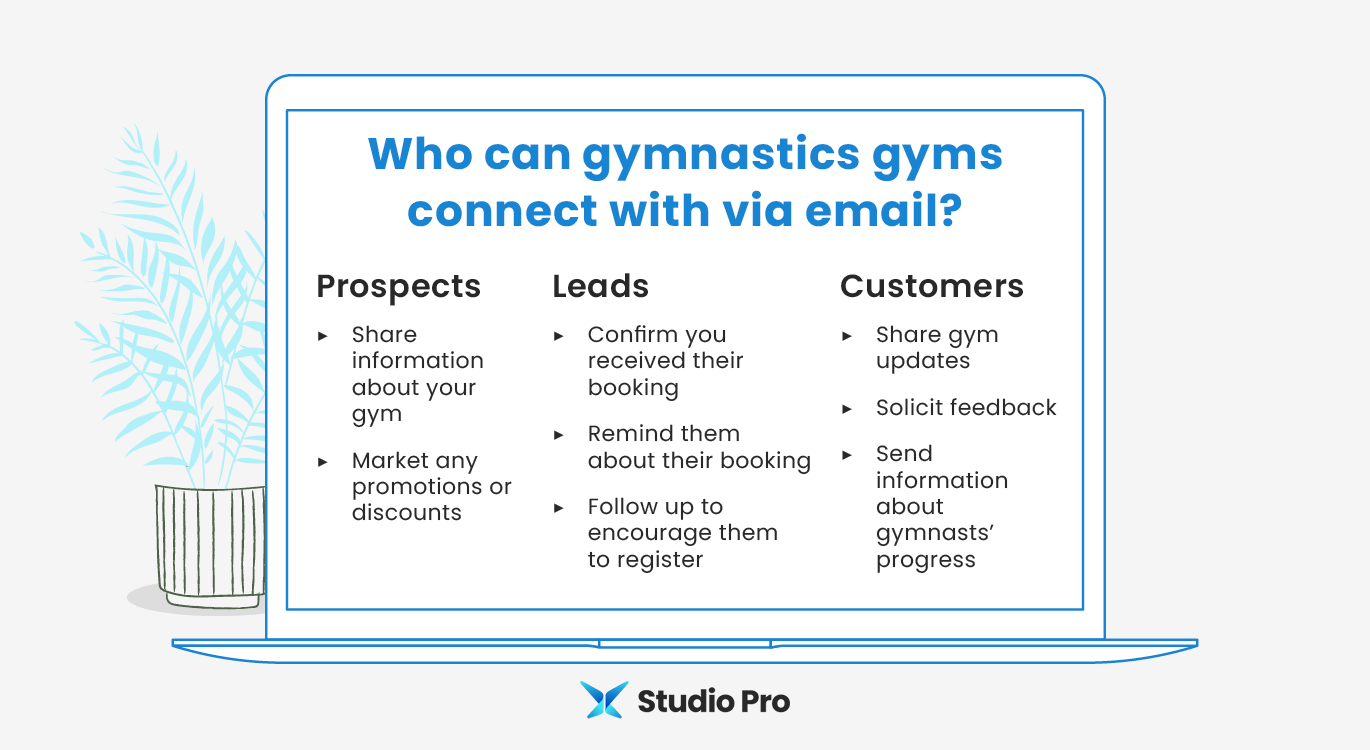
- Prospects. To connect with potential customers, leverage acquisition email marketing. This approach might include leveraging email lists to share more information about your gym and market any promotions or discounts. You may also build your own email subscriber list to introduce prospects to your gym.
- Leads. Once a prospect signs up for an introductory offer, they’re officially a lead. Keep in touch with them via email by confirming you received their booking, reminding them about the trial class, evaluation, or month they booked, and following up afterward to encourage them to register for your gym in a greater capacity.
- Current customers. Don’t forget about engaging your current customers via email to ensure they’re satisfied and invested in your gym. Loyalty email marketing for gymnastics gyms may include sharing gym updates, soliciting feedback, and sending information about gymnasts’ progress.
Since people receive hundreds of emails per day, you’ll want your gym’s marketing emails to stand out. Personalize these communications as much as possible with recipients’ names and information about their relationship with your gym. Keep your messages short and sweet, and use bulleted lists and bold text to encourage readability.
How Studio Pro Can Help
Studio Pro has multiple tools for emailing your gym’s audience members, including:
-
Robo-Mailer™, which allows you to schedule messages to current and prospective customers, send attachments, and contact students in specific classes or teams
-
Lead Center, which empowers you to create an automated email sequence to follow up with leads, personalize messages based on each lead’s stage in the conversion process, and enable discounts and promo codes
8. Text Messaging
Similar to email, text messaging allows you to reach your customers reliably. Considering Americans spend an average of five hours and 16 minutes on their phones per day, SMS marketing is a sure way to meet your gym community members where they already are.
While email is better for longer messages, use text messaging for quick communications like:
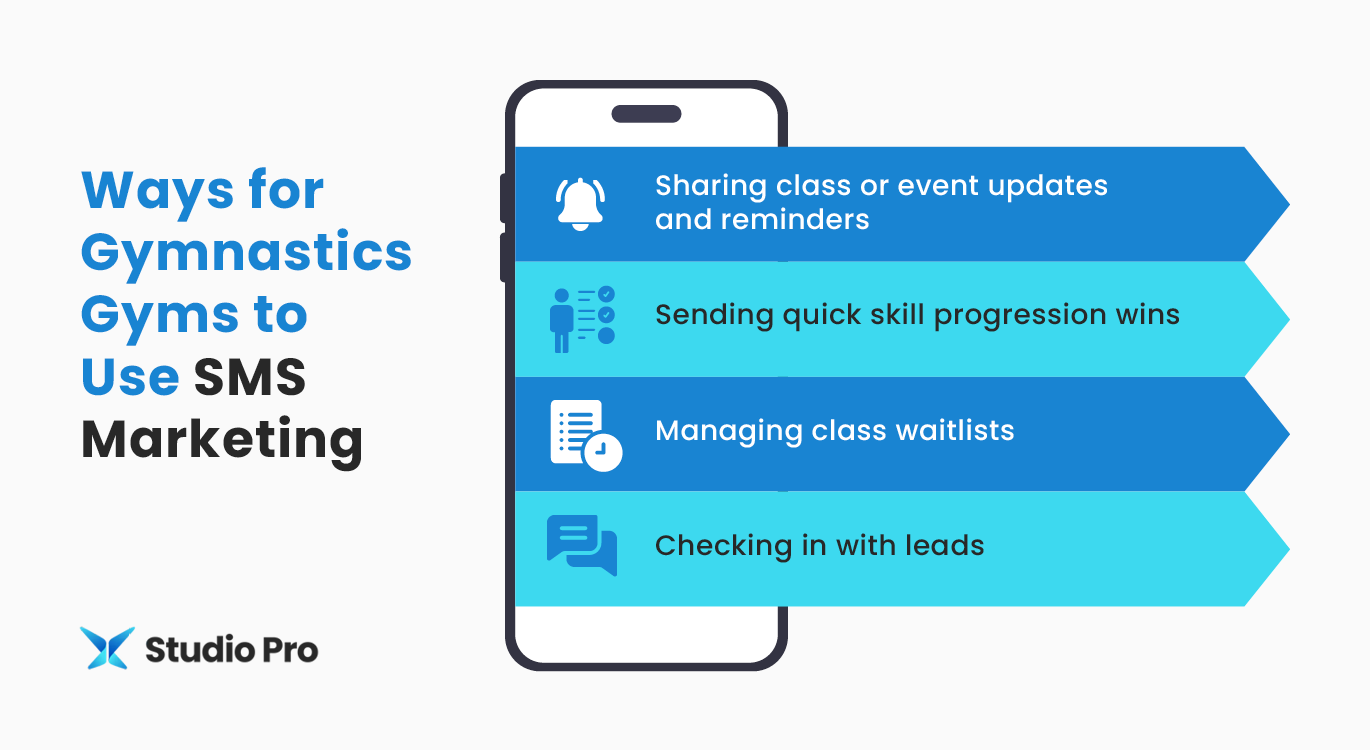
- Sharing class or event updates and reminders.
- Sending quick skill progression wins.
- Managing class waitlists.
- Checking in with leads.
Just be sure to collect double opt-ins before texting any customers or leads to ensure you have their full consent to contact them via text.
How Studio Pro Can Help
Studio Pro also has various tools for text messaging, such as:
-
Robo-Texter™, where you can customize, schedule, and send text messages to current and prospective gym families
-
Lead Center, where you can automate texts to leads, keeping them in your pipeline
9. Direct Mail
Contrary to popular belief, direct mail is alive and well, with the highest ROI for individual media at 161%. Receiving a postcard in the mail provides a physical reminder of your business and helps your gym stand out among competitors who may only rely on digital channels.
Consider using a residential mailing list to reach as many prospects in the area as possible or a consumer list to narrow your audience down based on factors like whether they have children and disposable income to spend on gymnastics.
If you have physical addresses for prospects or leads, you may also send them direct mail to strengthen relationships and share exclusive discounts that encourage them to convert. Add a QR code that links to your website to easily bridge the gap between your online and offline marketing channels.
10. Branded Merchandise
Never underestimate the power of a t-shirt or mug with your gym’s logo on it. By selling gym merchandise, you not only generate extra revenue, but you also give gym families a chance to show off their support for your gym and naturally advertise your business to their friends and families.
In addition to classic merchandise staples like t-shirts, expand your offerings to gymnastics-specific items, such as grips, water bottles, and leotards. That way, athletes can represent your gym wherever they are!
How Studio Pro Can Help
Sell branded merchandise through Studio Pro’s Point-of-Sale system. Set up your gym’s Online Store, where you can:
11. Mobile App
Centralize gym communications with your very own mobile app. Studio Pro empowers you to personalize your gym’s app with your unique branding, so it appears as if it belongs to your gym.
Then, students and parents can download your mobile app from the Apple or Google Play app stores. Use your gym’s mobile app to:
-
Send event reminders and updates through push notifications.
-
Send registration reminders with your registration link attached.
-
Share videos and photos of your gymnasts in action.
-
Collect UGC from gym families for social media.
With a central, branded hub for your gymnastics families, you can provide a professional-looking, easily accessible way to stay in touch with current customers.
Gymnastics Marketing Health Check
To assess your gym’s current marketing strategy, complete the health check quiz below.
Kickstart Your Own Gymnastics Marketing Strategy
A strong gymnastics marketing strategy is key to informing prospects, nurturing leads, and engaging current gym families. When you combine a variety of online and offline marketing channels, you can develop a diverse strategy that reaches current and potential customers wherever they’ll be most receptive to your content.
To help you consistently reach and engage your audience, leverage Studio Pro. In addition to our gymnastics marketing features, we also have tools that help you streamline operations and offer a positive customer experience once you convert leads. Get a free 30-day trial today to upgrade your marketing and gym management with Studio Pro!
If you’re looking to learn more about what Studio Pro can do for your gymnastics business, explore the following resources:

Laura Cole is the Business Leader of Studio Pro, a leading studio management software platform serving over 7,000 studios across all 50 U.S. states and more than 35 countries. Laura brings deep expertise in SaaS operations, strategic planning, and project management, with a passion for helping dance, cheer, gymnastics, and performing arts businesses grow and thrive.
Since taking the helm in 2020, she’s been dedicated to building tools that streamline studio operations and empower small business owners to succeed. When she’s not leading Studio Pro or partnering with studio owners, Laura enjoys running, yoga, and hosting friends at home with her husband and two young boys.